 StreamLive Pro
How to host a live Q&A session on YouTube and Facebook
Run a live Q&A: collect questions before, read YouTube and Facebook chat in one panel, show a question on screen, bring in an expert by link, and reuse the answers.
A live Q&A sounds easy: you go live and people ask. In practice the first ten minutes are quiet, then three questions arrive at once on two networks, one of them rude, while you are mid-answer. A good Q&A is planned around that rhythm. You arrive with questions in hand, you have one place where all the new ones land, you choose which one goes on screen, and you know in advance what you will do with a question you cannot answer.
This guide is for a creator, a teacher, a small business or an organisation that answers its audience live, alone or with one expert as a guest. For example, a weekly "ask the accountant" session before the tax deadline, or a teacher answering exam questions the evening before the test.
Plan the session
| Decision | Simple answer | When to do more |
|---|---|---|
| Length | 30 to 45 minutes | An hour if the questions keep coming |
| Where | YouTube and a Facebook Page you manage, at the same time | More networks if your audience is there, knowing their chat is not read (see below) |
| Who answers | You | You plus an expert joining by link |
| Where questions come from | Live chat, plus questions collected before | A form or a post a week before |
| What viewers see | Your camera, and the current question on screen | A second camera or slides for longer answers |
Collect questions before you go live
A good opening question is one you already have. A week before, post an announcement asking for questions in the comments, or schedule the broadcast so YouTube and Facebook have an event to share. When you schedule a broadcast in StreamLive Pro you can pre-announce it on YouTube and Facebook: Schedule a live broadcast in advance. Pick five or six questions that cover the topics people care about, and keep them in a note next to the studio. If the chat is slow at the start, you answer those, and say whose question it was if they agreed.
Where live questions arrive
The Chat panel on the live page gathers comments from YouTube's live chat, from Facebook comments on the live video of each Page, from viewers on StreamLive Pro's own player, and, read only, from Twitch and Kick chat. Replies go to YouTube and Facebook only. Comments written on Instagram, TikTok, X or LinkedIn are not read, so if you stream there too, keep that network's own window open or tell viewers where to ask. Details: Live chat from YouTube and Facebook in one panel.
You can reply from the panel to YouTube and Facebook. The reply is posted on the network itself, so the viewer and everyone else there sees it. A short written reply, for example "Answering this right after the break", tells people their question was seen.
The panel has no moderation tools: deleting a comment, hiding a user or slowing the chat are done in the network's own tools. On YouTube, Slow mode and moderators are set in YouTube itself (Moderate live chat, checked 5 November 2026). If your audience is large, ask a trusted person to moderate there.
Steps
- Connect the networks. In Connections connect your YouTube channel and the Facebook Page. A YouTube channel that never went live must enable live streaming first, and the first time can take up to 24 hours: How to go live on YouTube from your computer.
- Schedule and announce. In Live stream choose Schedule broadcast, set the title as a promise ("Your questions about the new tax year, answered live"), and share the link.
- Invite the expert, if there is one. On the day, send the guest link from the studio. One link serves everyone and works for 4 hours, so do not send it a week early. The guest joins from a browser, no install: Guests and invitations — bringing people into the room. Do a five-minute sound check together before going live: How to do a live interview with a remote guest.
- Prepare the screen. Open Browser Studio, choose a layout for you and the guest side by side: Side by side and picture in picture layouts in a live. Add a title with the topic and, if you like, a ticker with "Ask in the chat": Add a news ticker to your live stream.
- Choose the look for on-screen questions once. In the studio open Graphics and press Comments. Choose style, position and how long a question stays. More below.
- Press Record and go live. If you want to keep the session, press Record. Without it, the recording is removed about two hours after the broadcast.
- Open with a prepared question. Then say how to ask, and repeat it every ten minutes for viewers who just joined.
- Put each live question on screen as you answer it. Read it first, click it in the Comments panel, read it out loud, and answer.
- Close on time. Say what happens to unanswered questions, for example a follow-up post or the next session.
Show the question on screen
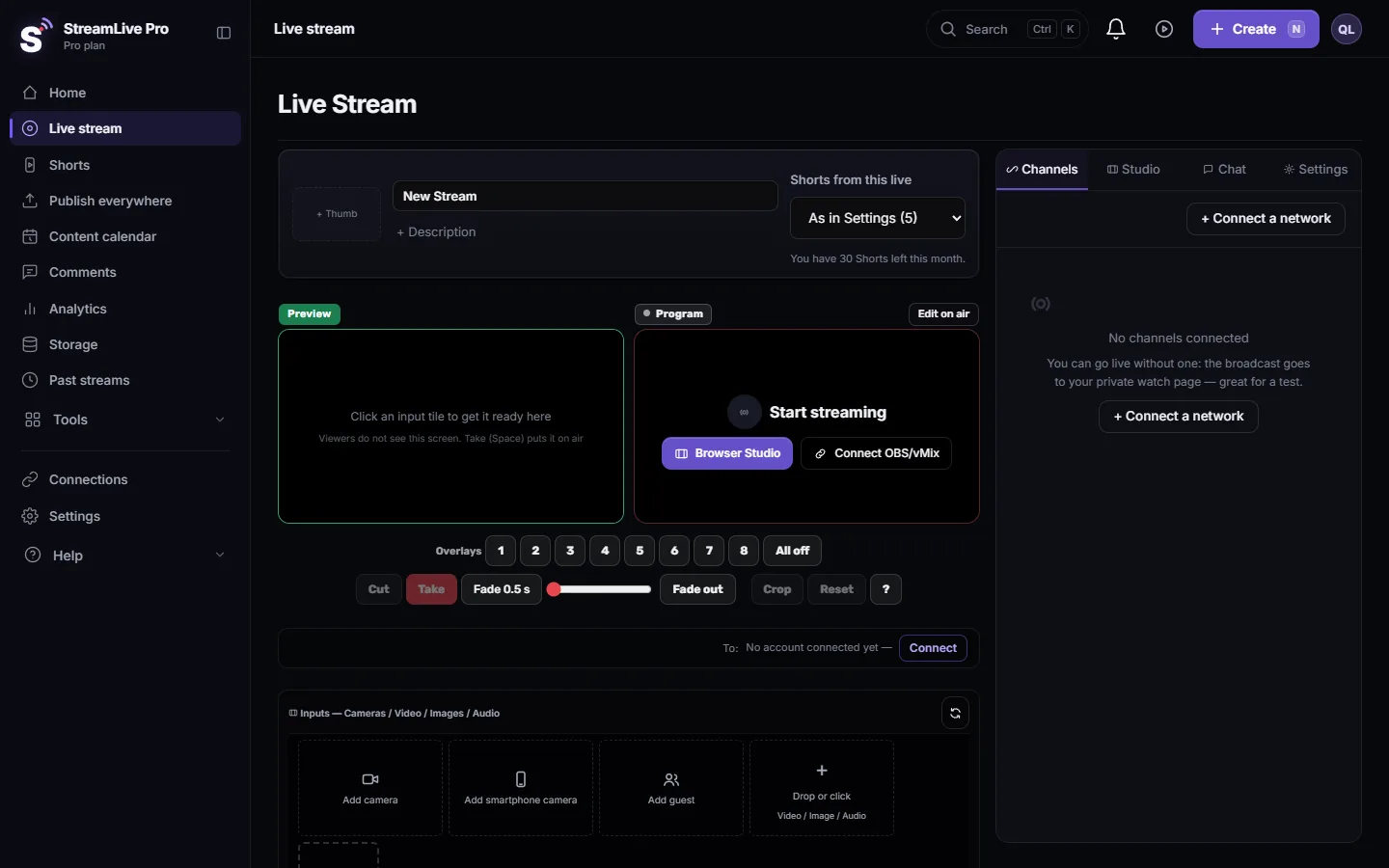
Viewers who join in the middle, and everyone watching the recording later, need to see the question you are answering. In the browser studio, Graphics, then Comments, lists the latest comments from the chat. Click one and it appears on the picture as a card with the viewer's name and words; every network and the recording show it. Choose Pinned for a question you will discuss for several minutes, or a short time for quick ones. Nothing is shown unless you pick it, so read before you click. Keys: Shift+C shows the latest comment, Shift+H hides the card. Full guide: Show a viewer's comment on screen during a live.
Questions you cannot answer on air
Decide this before you start. A question that needs personal details, a medical or legal question that depends on the case, or a complaint about an order: say on air that you will answer privately, and do it. Do not read private details out loud, and do not put such a question on screen.
Common mistakes
- Waiting for the first question in silence. Start with prepared questions.
- Answering without repeating the question. Viewers on the other network did not see it. Read it out, or put it on screen.
- Promising every network. If you stream to a network whose chat is not read in StreamLive Pro, say where to ask.
- The guest link sent too early. It works for 4 hours; send it on the day.
- No Record pressed. The session is kept only if you press Record.
- Running long. End when you said you would, and announce the next session.
After the session
The answers are useful content. When the broadcast ends, StreamLive Pro cuts vertical Shorts from it automatically unless you switched this off; a clear question followed by a short answer often makes a good Short, but check what the AI picked before publishing: How to make Shorts from a live stream automatically. A transcript of the session helps you write a summary post of the questions and answers: Transcribe a live stream after the broadcast. You can also read the chat of a live through ChatGPT or Claude and ask them to list the questions that were not answered: Use StreamLive Pro from ChatGPT and Claude.
Where StreamLive Pro fits
StreamLive Pro runs the Q&A from a browser: one stream to YouTube and a Facebook Page at the same time, their comments in one panel with replies, a question on screen in one click, an expert by link, the recording kept when you press Record, and Shorts afterwards. It does not read the chat of every network, has no moderation tools of its own, and does not show live captions during the broadcast. More: /browser-studio?lang=en.
Frequently asked questions
How do I see questions from YouTube and Facebook in one place?
The Chat panel on the live page shows YouTube live chat and Facebook comments on the live video together, plus viewers on StreamLive Pro's own player.
Can I show a viewer's question on screen?
Yes. In the browser studio open Graphics, then Comments, and click the question. It appears on the broadcast with the viewer's name and stays for the time you chose.
Can I reply to a question in writing during the live?
Yes, on YouTube and Facebook. The reply is posted on the network, so viewers there see it too.
Can I delete a rude comment from StreamLive Pro?
No. The chat panel has no moderation tools. Delete or hide it in the network's own tools, where you can also add moderators.
Can an expert join the Q&A from home?
Yes. Send the guest link from the studio on the day. The guest joins from a browser, and the link works for 4 hours.
Are Instagram and TikTok comments shown in the panel?
No. The panel reads YouTube and Facebook (with replies), Twitch and Kick (read only), and StreamLive Pro's own player. For other networks, use their own window.
Keep reading
Live stream a youth or amateur sports game with one or two phones: where to stand, sound, the score on screen, the venue's internet, privacy and highlights afterwards.
Run a webinar on YouTube and Facebook at onceHow to run a webinar live on YouTube and a Facebook Page at the same time: announcing it, slides and panelists, questions from both chats, and the replay.
Live streaming for small business: a practical guideLive streaming for a small business: which live formats sell, which networks to pick, a weekly routine, and turning each live into a week of Shorts and posts.
What is VOD? The replay of a live streamWhat VOD means: video on demand, the recording people watch after a live ends. Where replays live on each network and in StreamLive Pro, and how to keep yours.
Want to try it? 7-day trial, no credit card.
Start free